Ambystoma mavortium

Scientific name. Ambystoma mavortium
Common Name. Western Tiger Salamander
General information. Ambystoma mavortium is primarily nocturnal, feeding on terrestrial and aquatic invertebrate (and small vertebrate) prey as adults. Usually in loose or sandy soil that permits burrowing.
Protected status. The Western Tiger Salamander is not a protected species in Texas and can be legally collected with a hunting license.
Diagnostic features. Large salamander with broad flat head and small eyes. Four toes on front feet, and five on hind feet; hind feet have digging tubercles. Tail is long and flattened at tip Eleven to fourteen costal grooves.
Coloration. Black bars and spots larger and fewer than Ambystoma tigrinum
General distribution. In North America, Ambystoma mavortium is across many of the western US states, though isolated populations occur in states along the Pacific Coast. Also found in southern Canada.
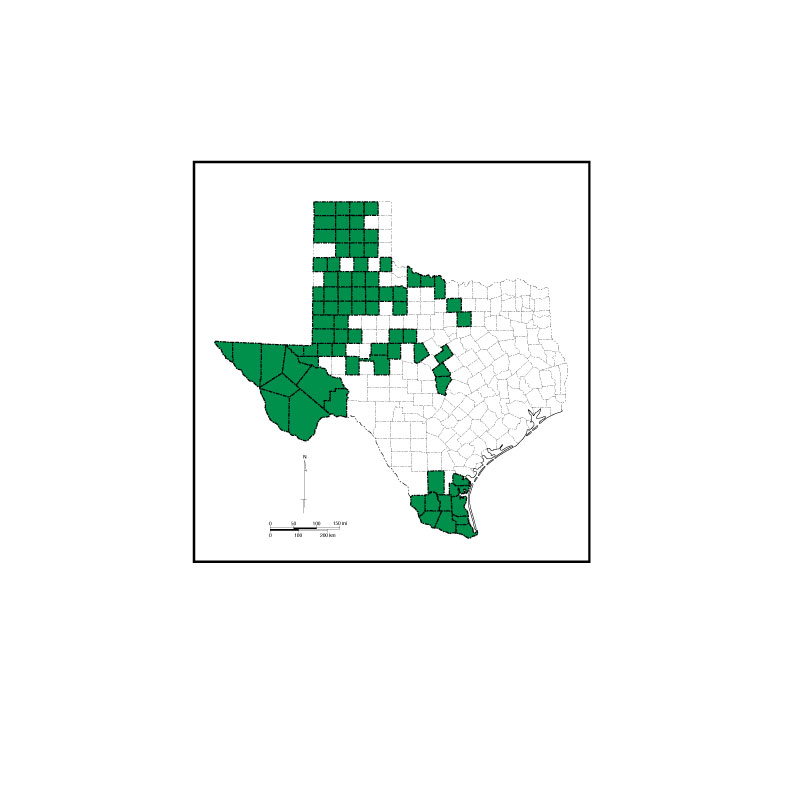
Texas distribution. In Texas, Ambystoma mavortium is found across the Panhandle and portions of southern and western portions of the state.
Habitat. Ambystoma mavortium is usually found adjacent to quiet bodies of water, some of which may be ephemeral ponds or playas.
Reproduction. Breeding takes place from January to May in either permanent or ephemeral bodies of water, rarely streams.
Size. As an adult, Ambystoma mavortium can reach between 18-35 cm (7-14 in) in total length.
Map. Orange counties indicate new county records since previous Herps of Texas update in 1998; all other colored counties reflect known distribution prior to 1998 for species and/or subspecies. Map is based on museum voucher specimens.