Ambystoma talpoideum
Scientific name. Ambystoma talpoideum
Common Name. Mole Salamander
General information. Ambystoma talpoideum burrows in loose soil and remains underground except during breeding season.
Protected status. The Mole Salamander is not a protected species in Texas and can be legally collected with a hunting license.
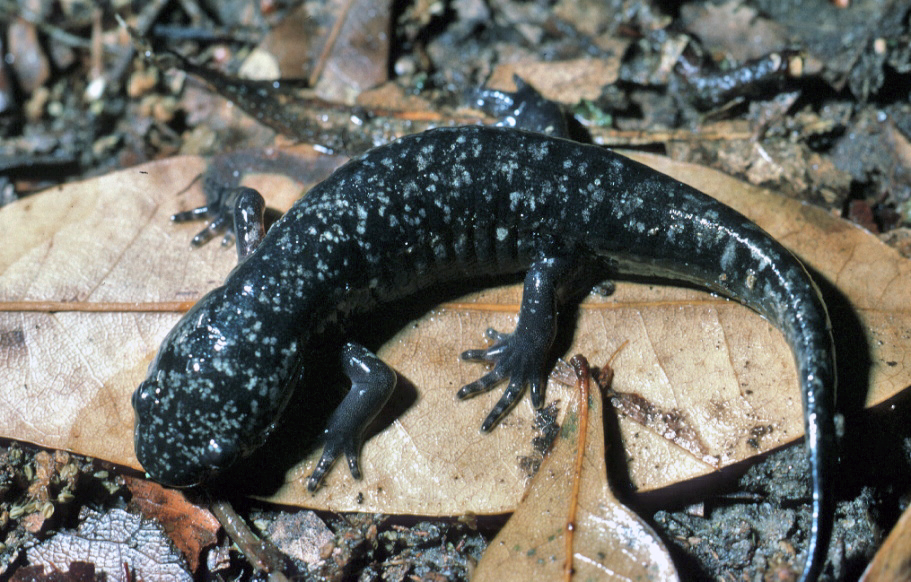
Diagnostic features. Large head and relatively short tail Four toes on forelimbs, and five on hind limbs Ten or eleven costal grooves
Coloration. Dorsal color is black, brown, or gray with scattered bluish-white flecks. Gray ventral surface.
General distribution. In North America, Ambystoma talpoideum is found from South Carolina to Florida, west to Texas and Oklahoma.
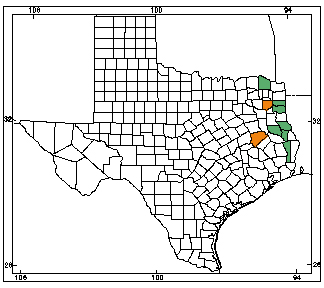
Texas distribution. In Texas, Ambystoma talpoideum is found in two populations in east Texas: one along the Red River and the other along the Texas/Louisiana border.
Habitat. Ambystoma talpoideum can be seen in lowland, moist, wooded areas with soil suitable for burrowing, in mammal burrows, or under logs.
Reproduction. Breeding in Ambystoma talpoideum occurs from December to February after cold rains. Females lay up to 400 eggs in small masses in shallow pools.
Size. Ambystoma talpoideum reach an adult total length between 8-12 cm (3.2-5 in).
Map. Orange counties indicate new county records since previous Herps of Texas update in 1998; all other colored counties reflect known distribution prior to 1998 for species and/or subspecies. Map is based on museum voucher specimens.