Bufo cognatus
Scientific name. Bufo cognatus
Common Name. Great Plains Toad
General information. Bufo cognatus is nocturnal and feeds on insects. When threatened, B. cognatus may camouflage itself by inflating its body and covering its head in the soil.
Protected status. The Great Plains Toad is not a protected species in Texas and can be legally collected with a hunting license.
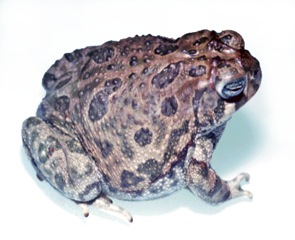
Diagnostic features. Broad head, short snout. Long hind legs with digging tubercle. Cranial crests at rear of head extend forward diagonally to meet at boss. Elongated parotoid glands behind cranial crests
Coloration. Gray, brown, or green, with large dark blotches bordered by lighter color.
General distribution. Bufo cognatus is found in parts of Canada and Montana through the Central Plains states, west into Southern California, Arizona and New Mexico, and south into Mexico.
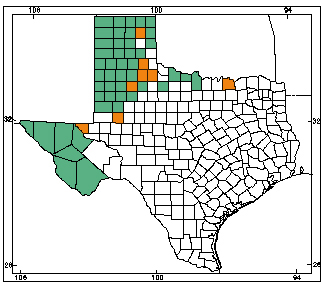
Texas distribution. In Texas, Bufo cognatus is found in the western half of the state, including the Panhandle.
Habitat. Bufo cognatus can be seen in open grasslands, cultivated fields, brushy areas, irrigation ditches, streambeds, and flood plains; B. cognatus prefers a drier habitat than most toads, with loose soil for easy burrowing.
Reproduction. Breeding in Bufo cognatus occurs from April to September, typically during or after a rainfall.
Size. Bufo cognatus typically reaches an adult length of 4.5-9 cm (1.5-4.5 in).
Calls.
Map. Orange counties indicate new county records since previous Herps of Texas update in 1998; all other colored counties reflect known distribution prior to 1998 for species and/or subspecies. Map is based on museum voucher specimens.