Eleutherodactylus planirostris

Scientific name. Eleutherodactylus planirostris
Common Name. Greenhouse Frog
General information. Primarily nocturnal, the Greenhouse Frog seeks shelter under vegetation during the day. Essentially any refuge providing a moist microclimate is suitable for this species: greenhouses, dumps, trash piles, and animal burrows. This terrestrial species feeds on ants, beetles, roaches and other small invertebrates.
Protected status. The Greenhouse Frog is not a protected species in Texas and can be legally collected with a hunting license.
Diagnostic features. Flat, elongated body with pointed snout Lack of webbing between the toes
Coloration. Brown dorsally, with reddish tones White belly Reddish eyes Two pattern classes: Striped, with longitudinal light-colored stripes Mottled, with dark and light irregular markings.
General distribution. Native to Cuba, but introduced to many islands around the Caribbean as well as the United States (Florida, Georgia, Mississippi, Louisiana, and Texas), and Mexico.
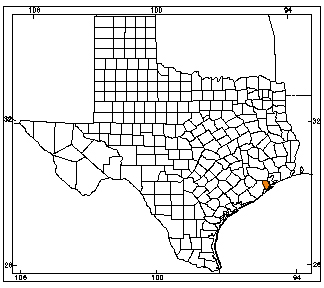
Texas distribution. In Texas, this species has been introduced to Galveston Island.
Habitat. In its native habitat, the Greenhouse Frog lives in moist valleys and along small streams.
Reproduction. Breeds May through September during rainy season. Lay eggs under vegetation or debris. Development (tadpole to froglet) takes place entirely within the egg.
Size. Adult Eleutherodactylus planirostris grow to 1.5-3 cm (0.5-1.2 in) total length.
Calls.
Map. Orange counties indicate new county records since previous Herps of Texas update in 1998; all other colored counties reflect known distribution prior to 1998 for species and/or subspecies. Map is based on museum voucher specimens.