Holbrookia subcaudalis
Scientific name. Holbrookia subcaudalis
Common Name. Tamaulipan Spot-tailed Earless Lizard
General information. Holbrookia subcaudalis is diurnal species at home in flat, non-sandy habitats. Insectivorus, this species can be found in and adjacent to agricultural fields as well as sparsely vegetated habitats, and is more easily seen along the edges of roads between April and June.
Protected status. The Tamaulipan Spot-tailed Earless Lizard is not a protected species in Texas and can be legally collected with a hunting license.
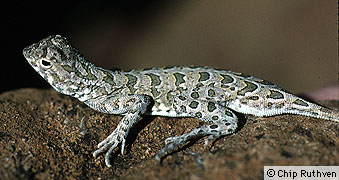
Diagnostic features. Slightly flattened body Two throat folds (one weak) with no external ear openings Two rows of body blotches on either side of midline not fused together. Blotches on hind limbs circular in shape without forming bands.
Coloration. Dark brown spots on lighter brown dorsal surface. Ventral surface white with dark spots on tail. Round, dark spots on ventral surface of tail and lateral black spots on abdomen Breeding females may have light green or yellow body color
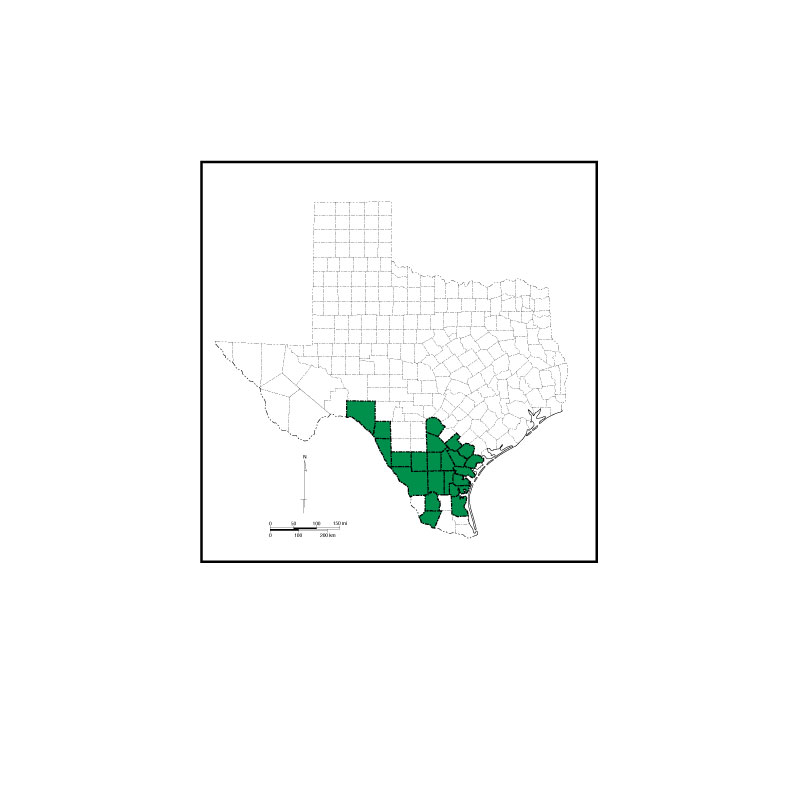
General distribution. In North America, Holbrookia subcaudalis is found south of the Edwards Plateau in south Texas; also present in adjacent states of Mexico
Texas distribution. In Texas, the distribution of Holbrookia subcaudalis extends south of the Edwards Plateau
Habitat. Holbrookia subcaudalis can be found in non-sandy, flat habitats in south Texas: open scrub lands (not invaded by non-native grasses) and in disturbed areas, such as agricultural fields
Reproduction. Eggs are laid in the late spring, sometimes with a second clutch laid later in the summer. Clutch sizes ranging between 6 and 8.
Size. Adult body lengths of Holbrookia subcaudalis, exclusive of tail, ranges from 3–7 cm (1–3 in).
Map. Map is based on museum voucher specimens.