Phrynosoma cornutum
Scientific name. Phrynosoma cornutum
Common Name. Texas Horned Lizard
General information. This diurnal lizard is quick, seeking shelter among the brush or in animal burrows. The Texas horned lizard may also cover itself in loose sand. This species is typically seen on warm days of late spring or summer, particularly in the first few hours after dawn and the hours just before dusk; hibernation is from late summer to the following spring. This species of horned lizard feeds on large ants and may squirt blood from its eyes under stress.
Protected status. The Texas Horned Lizard is considered an threatened species by the Texas Parks and Wildlife Department and is fully protected by the state.
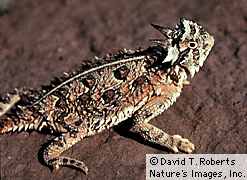
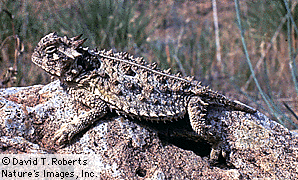
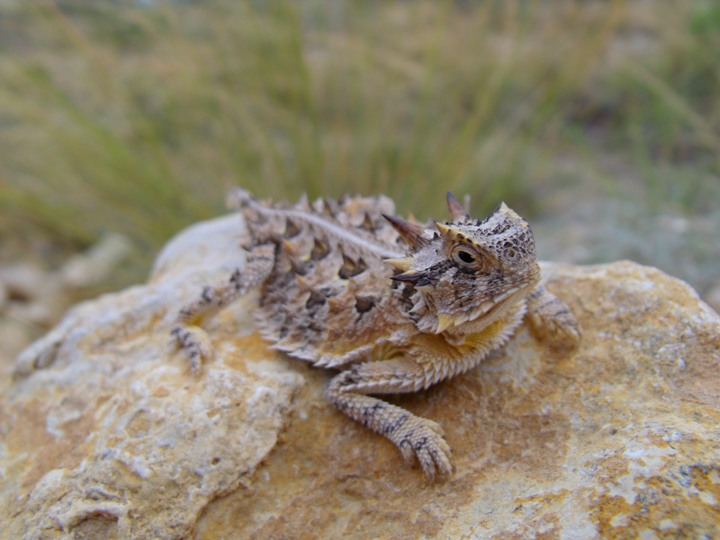
Diagnostic features. Flat, broad lizard Dark lines downward from eyes and across head Pointed snout and short tail Crown of spines on the back of the head, with the two center ones enlarged resembling horns Row of spines projecting from both sides of throat. Two rows of spiny scales on sides of body Large spines on dorsal surface surrounded by dark pigment. Keeled ventral scales.
Coloration. Dorsal ground color varies with environment, but may be tan or gray with white and red or yellow tones The dorsal pattern consists of dark brown spots with pale posterior borders behind the head, on body, and tail on each side of light middorsal line.
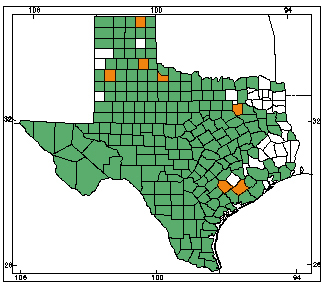
General distribution. In North America, Phyrnosoma cornutum is found from Kansas to Louisiana through Texas to New Mexico and northern Mexico.
Texas distribution. In Texas, Phyrnosoma cornutum was originally seen throughout most of the state, but numbers dropped dramatically in the 1950’s and 1960’s with habitat loss, pesticide use, and introduction of the non-native fire ant (Solenopsis invicta). Today, Texas horned lizards are only seen in the western third of the state.
Habitat. Phyrnosoma cornutum prefers warm, sandy, arid environments and is typically found in flat, open areas with little vegetation.
Reproduction. Breeding occurs in late spring upon emergence from hibernation. Females lay eggs (20-40) in burrows where they incubate for 40-50 days.
Size. Phyrnosoma cornutum reaches adult lengths of 6-10.5 cm (2.5-4.25 in).
Map. Orange counties indicate new county records since previous Herps of Texas update in 1998; all other colored counties reflect known distribution prior to 1998 for species and/or subspecies. Map is based on museum voucher specimens.